


The Hormone Sabotaging Your Results (And It’s Not What You Think)

We live in a society that trains us to do more, be more, earn more. To show up 120%. To push through. To hustle. And if you’re tired, if you’re struggling, if you’re not keeping up—you tell yourself you’re weak. You need to be stronger.

I see it in so many of my girlfriends. Women who are exhausted but can’t stop. Who feel guilty for resting. Who are so deep in the shoulds—I should be further along, I should be doing more, I should be able to handle this—that they’ve completely lost connection with what their body is actually telling them.

It’s a very masculine way of living: output-driven. Achievement-driven. Disconnected from the body’s signals and rhythms. And it’s making us sick—literally.

I know, because I lived it.

I Hit Rock Bottom in Bali — While Doing Everything "Right"

I found myself literally on my knees in Bali—chased by one stressful situation after the other that I couldn’t change, lots of money lost, on top of not getting enough work to make a living. That insecurity, inbalance, stress affects your body in so many ways. For me it was hair loss. Additional weight that wouldn’t shift. Feeling fatigued no matter how much I slept. And then going to intense Pilates and yoga classes thinking they would re-energise me—only to feel even more drained.

There’s something I wish someone had told me about before I spent all those years pushing harder, training more, achieving more and wondering why I felt more and more depleted. Spoiler: it’s not a hack. It’s not a supplement. But a hormone that is running more of your life than you probably realise.

It’s called cortisol.

If you constantly feel tired—not from lack of sleep, just drained and no matter what you do it doesn’t get better. If you get sick often and can’t seem to shake it. If your body feels tense even when nothing is “wrong.” This post is for you.

What Is Cortisol—And Why Should You Care?

We talk a lot about what we do in a workout. The reps. The pace. The discipline. But we rarely talk about what’s happening inside our bodies before we even step on the mat.

Cortisol is your body’s primary stress hormone. It spikes when you’re rushing, overwhelmed, under-slept, under-nourished, or — and this one hit me hard — when you’re training intensely on top of a life that’s already running at full capacity.

Your nervous system doesn’t distinguish between “I’m being chased by a lion” and “I have back-to-back meetings and a 6am workout and I haven’t eaten properly in two days.” It responds the same way: cortisol floods the body, your nervous system shifts into survival mode, and the signals your body sends start to change.

This Is What Chronic Stress Actually Does to Your Body

Chronic high cortisol looks like: fatigue that doesn’t go away with rest. Mood swings. Weight and water your body refuses to let go of—because when cortisol never fully drops, your body stays in survival mode and holds onto every resource it can. Poor recovery. Low motivation. Inflammation. A nervous system that is always on.

I lived in that state for a long time. I thought I just needed to push through. I didn’t. I needed to learn how to actually recover.

Why Rest Isn't What You Think It Is

Rest isn’t lazy. It’s not “doing nothing.” Real, deep rest is active—it’s the part of the cycle your body needs to repair, regulate and come back stronger.

Not all rest is equal though. Scrolling your phone for an hour? Your nervous system is still activated. What actually works is what I call deep rest — the kind that genuinely downregulates your stress response and tells your body: you are safe.

5 ways to actually balance your cortisol

𖦹 Yin yoga, yoga nidra or stillness—guided especially

Long holds, passive stretching, and stillness signal safety to your nervous system. Yin yoga, yoga nidra, meditation, or any form of guided session will do. Even 20 minutes shifts your body out of fight-or-flight and into rest-and-repair. Especially in the beginning, I’d recommend a guided session—our minds tend to wander everywhere if we’re not gently brought back.

𖦹 Sauna, day spas or time in nature

Heat exposure followed by cooling (emphasis on “cool” not “ice”) is one of the most powerful parasympathetic triggers we have access to. It clears stress hormones, improves sleep quality and floods the body with endorphins. A non-negotiable for me. And if a sauna isn’t accessible—time in nature works on the same principle. Slowing down, being present, letting your senses land somewhere calm.

𖦹 Breathwork: the reason why you could leave Pilates and yoga feeling different

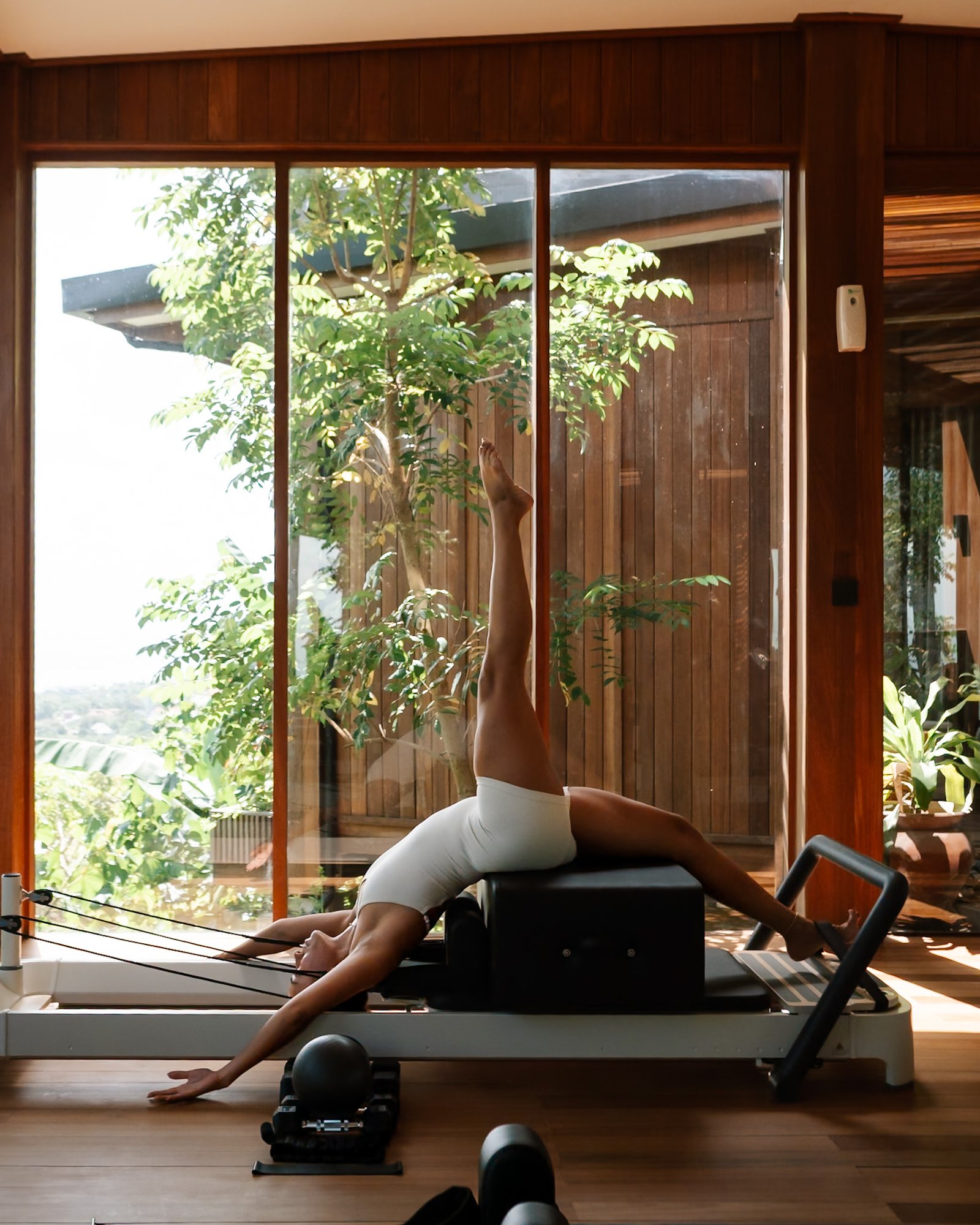
This is the reason an authentic Pilates class or a yin yoga class feels so different from a regular workout or fitness class. It’s not just the movement—it’s the breath. Both practices are built around intentional breathing. Different kind of breathing, but always centered around in- and exhales—a pattern that directly activates the vagus nerve and lowers cortisol.
You’re not just stretching or strengthening—you’re actively regulating your nervous system for an hour, if not even longer during a 1.5h yoga class. That feeling of calm clarity when you walk out? That’s your stress hormones dropping. It’s not magic. It’s breath.

𖦹 An evening wind-down that actually works

In the evening, cortisol is supposed to be at its lowest—signalling to your body that it’s time to rest and let melatonin rise. But most of us are on our phones, in group chats or working until we put our head on the pillow, which keeps cortisol elevated and delays that natural drop. Going to bed earlier with a book or a comfort series you’ve already seen hits a sweet spot: your brain gets absorbed enough to stop spinning, without being stimulated enough to activate stress. I fall asleep faster, deeper and wake up in a completely different state when I do this consistently.

𖦹 Mindful eating: slow, present, no screens

This one surprises people. When you eat rushed or distracted, your body is still in fight-or-flight mode. Digestion gets deprioritised, nutrients aren’t absorbed properly and cortisol stays elevated. You can be eating the healthiest meal in the world and getting a fraction of the benefit simply because of the state you’re eating in. Slowing down, tasting your food and stepping away from the laptop activates rest-and-digest—literally. Cortisol drops. You absorb more. You actually feel satisfied. Such a simple shift, such a real ripple effect.

And probably the most important one: Know when NOT to train hard

This one took me the longest to learn. If you slept badly, you’re emotionally overwhelmed or you’re getting sick—a hard session adds cortisol to an already stressed system. Walk. Stretch. Rest. That is the training that day, that week or that month. 
And if you need one more reason to stop pushing—let me share something that changed everything for me. When I finally started resting properly, I lost weight. Not because I was doing more. Because I was doing less. When cortisol drops, your body stops clinging to fat stores as a survival mechanism. It finally feels safe enough to let go. So if you’ve been training hard, eating well and still not seeing results—this might be the piece you’ve been missing. Consider this your permission slip to rest. Not as a reward. As a strategy.

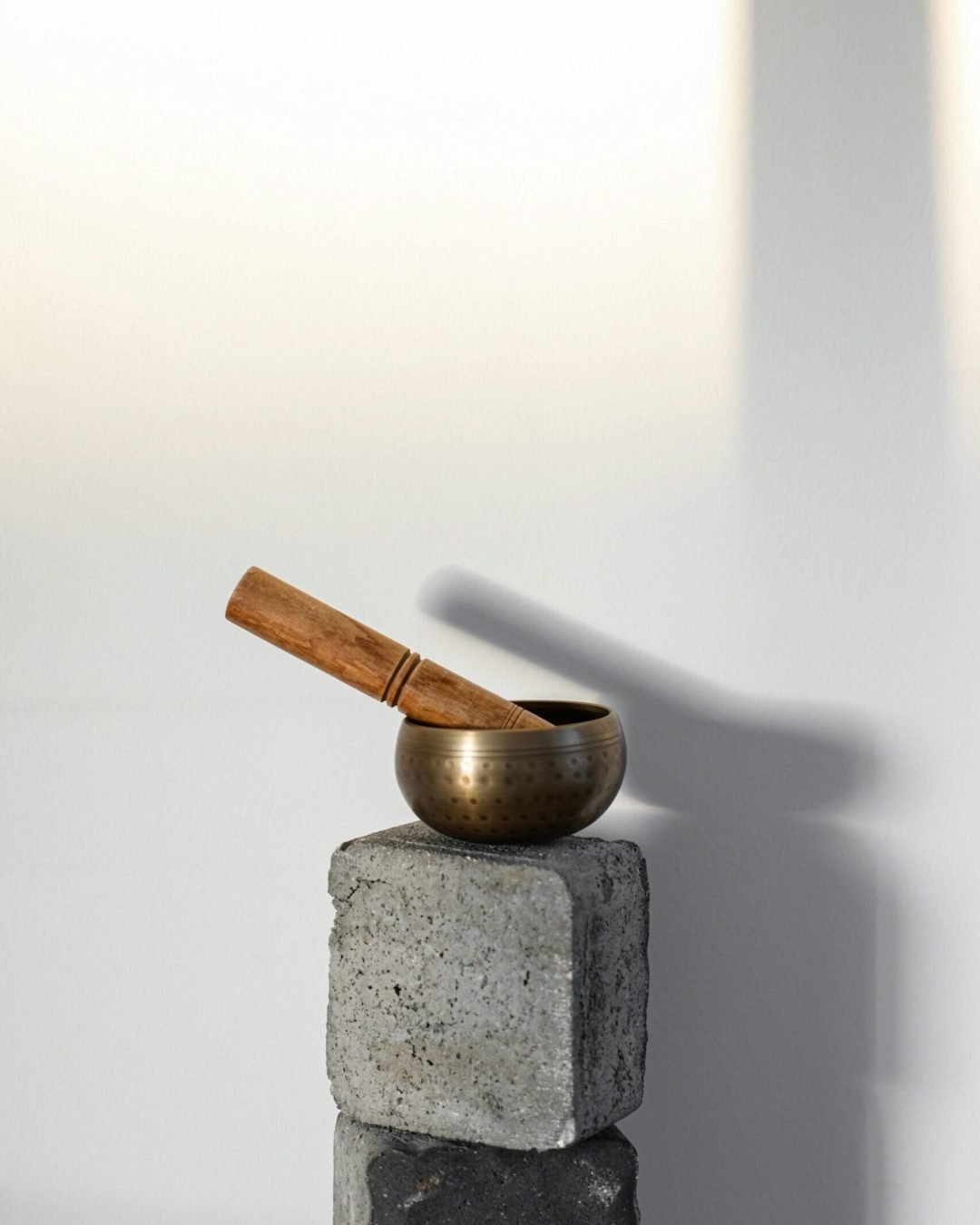
soundbowl

Here's What Life Feels Like on the Other Side

This is the part nobody talks about—because we’ve normalised feeling wired, tired, and tense for so long that we’ve forgotten what the other side feels like.

When your cortisol is balanced and your body feels genuinely safe, things shift in ways you don’t expect. You wake up and actually feel rested. Not just “I got 8 hours” rested—but restored. Your mood stabilises. The low-grade anxiety that hums in the background? It quiets. You stop reaching for caffeine to get through the afternoon.

Your body starts to let go—of weight, of water, of tension you didn’t even realise you were holding. Your digestion improves. Your skin clears. Your cycle, if you have one, becomes more regular. You recover faster from workouts. You get sick less often.

But the most noticeable shift is subtler than any of that: you start to feel at home in your body again. Not fighting it. Not pushing through it. Present in it. That low-level disconnection—the feeling of just going through the motions—starts to lift.

You have more patience. More creativity. More capacity for the people and things you love. Not because you’re doing more—but because you’re finally not running on empty.

This is what rest actually gives you. Not laziness. Not falling behind. More of yourself.

This Is Why I Do What I Do

I learned all of this the hard way. And I genuinely hope you don’t have to.

This is what I consider my mission—to talk about this, to keep learning and to offer a space where every version of you has room. The version that wants to move hard. The version that needs to slow down. The version that’s somewhere in between and trying to figure it out. All of it belongs. All we need to learn is to listen to what’s needed. No shoulds. No have tos. Only can dos.

Your body is not your enemy

Your body is a vehicle that drives where you direct it. And right now, most of us are directing it with constant pressure and force—and wondering why it’s breaking down.

Your body is not your enemy. It’s trying to protect you. When we understand what it actually needs—not just movement, but recovery, not just effort, but rest—everything changes.

With love,

—Siri

Share
Pin
Tweet
Comments

What do you think?

Leave a Reply

Your email address will not be published. Required fields are marked *

Latest posts